
Password Hashing and Salting: How Modern Websites Secure Your Login Credentials
September 19, 2026 · by Super Admin
Password Hashing and Salting: How Modern Websites Secure Your Login Credentials
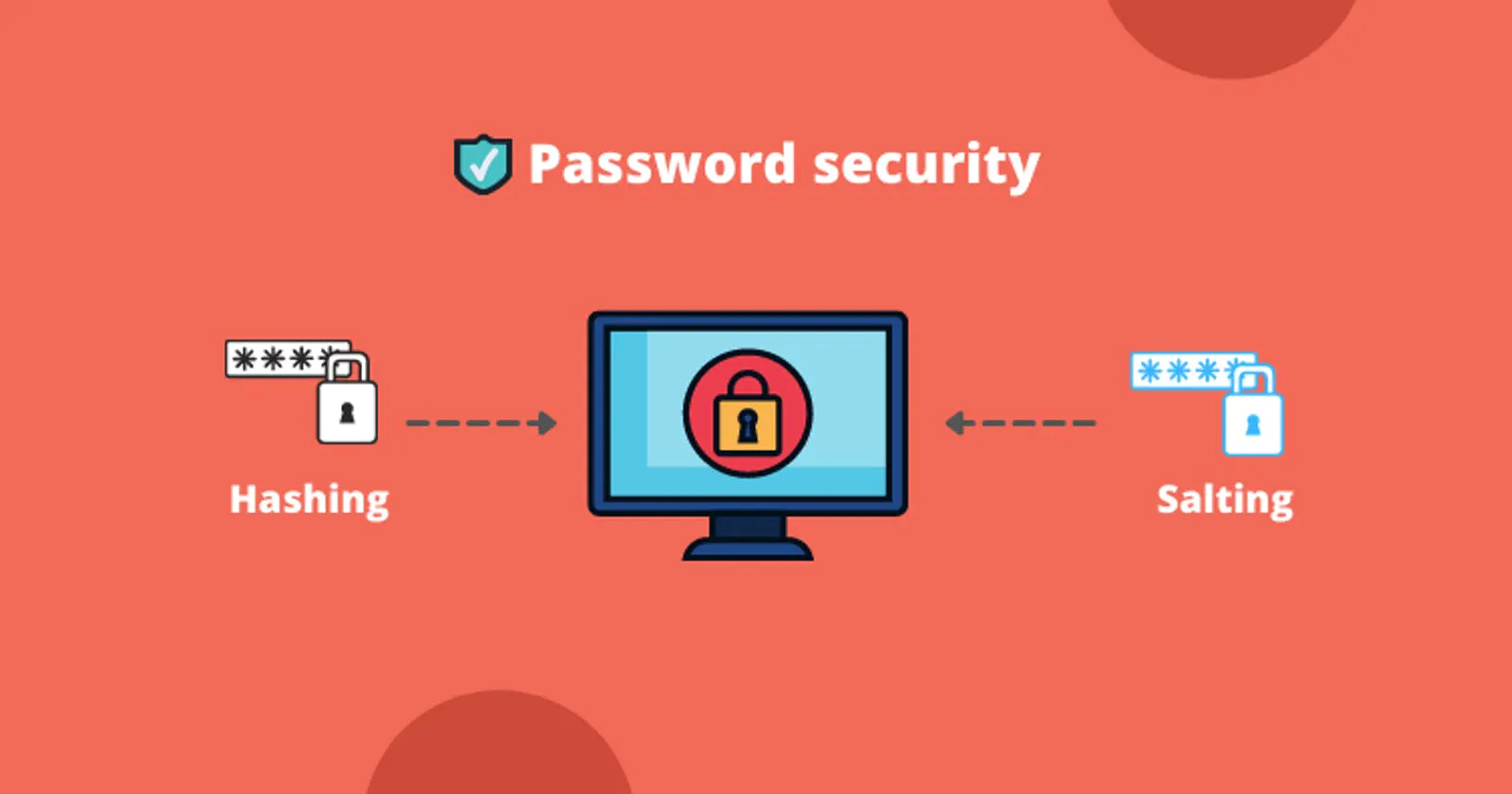
Ever wonder how modern websites keep your login credentials secure? The secret is surprisingly simple: reputable platforms do not actually store your plaintext password. If a database stores your password as plain text, any hacker who breaches the system can read it instantly, compromising your digital identity.
To prevent this vulnerability, security engineers use a specialized algorithm known as a cryptographic hash function. Think of a hash function like a high-tech meat grinder for data. You feed your password into the grinder, and it instantly transforms the text into a unique, fixed-length string of gibberish characters. This process is strictly a one-way function, meaning it is mathematically impossible to reverse the scrambled gibberish back into your original password. When you log back into your account, the website hashes the text you type and compares it directly to the stored hash. If the two strings match, you are granted access.
However, traditional hashing alone is no longer enough to stop modern cybercriminals. Attackers frequently deploy pre-computed databases called rainbow tables. These tables contain billions of pre-hashed common words and phrases, allowing hackers to instantly crack standard hashes through a quick reverse lookup.
To defeat this tactic, developers introduce a cryptographic salt. A salt is a unique, randomly generated string of characters appended to each user's password before it goes through the hashing algorithm. Because the salt is entirely random, even two users with the exact same password will end up with completely different hashes stored in the database. This renders massive rainbow tables useless. Strong digital security relies on the combination of continuous hashing and distinct salting to keep your personal data safe from prying eyes.
Beyond the Basics: Modern Password Security
To build a truly resilient authentication system, the industry has evolved beyond basic algorithms like MD5 or SHA-1, which are now too fast and easily targeted by specialized hardware like GPUs. Today, developers rely on deliberate, adaptive hashing algorithms such as bcrypt, Argon2, or PBKDF2.
These modern algorithms use a concept known as "key stretching." By adding a configurable computational cost, they intentionally slow down the hashing process by fractions of a second. While a human logging in will never notice the delay, an attacker attempting billions of automated guesses faces an impossible computational bottleneck. In the modern threat landscape, combining this artificial delay with robust salts ensures that even if a database falls into the wrong hands, your true password remains locked away.
Choosing the Right Shield: Bcrypt vs. Argon2
When developers select an algorithm for key stretching, they usually choose between two industry standards: bcrypt and Argon2.
- Bcrypt: Introduced in 1999, bcrypt remains a highly reliable choice. It is memory-safe and allows developers to scale up the "work factor" (computational difficulty) as server hardware improves over time.
- Argon2: As the winner of the Password Hashing Competition, Argon2 is the reigning gold standard. Unlike bcrypt, which only consumes CPU time, Argon2 is deliberately designed to be "memory-hard." It forces a computer to use a massive amount of RAM to process a hash. This specific trait makes it incredibly expensive and virtually impossible for hackers to build custom, high-speed hacking rigs using graphics cards (GPUs) or specialized chips (ASICs) to break the code.
The Next Line of Defense: Multi-Factor Authentication (MFA)
Even the most sophisticated hashing and salting techniques cannot protect an account if a user falls victim to a phishing scam or unknowingly types their password into a malicious replica website. To neutralize this threat, modern platforms implement Multi-Factor Authentication (MFA).
MFA adds layers of identity validation based on three core principles: something you know (your password), something you have (a physical phone, security key, or authenticator app), and something you are (biometrics like facial recognition or a fingerprint). By requiring a secondary, time-sensitive code sent via an app or an SMS, MFA ensures that an attacker who manages to steal your password still cannot breach your account.
Best Practices: What You Can Do as a User
While developers carry the burden of securing back-end databases, digital safety remains a shared responsibility. You can dramatically reduce your digital vulnerability by following a few foundational habits:
- Never reuse passwords: Use a unique password for every single account to prevent a breach on one minor website from compromising your main email or banking credentials.
- Embrace length over complexity: A long phrase made of four or five random words (e.g., correcthorsebatterystaple) is vastly harder for a computer to crack than a short, complex string like P@$$w0rd!.
- Utilize a password manager: Rely on a reputable password manager to generate, store, and automatically fill your complex credentials so you only ever have to memorize one master key.